
Residential land clearing sounds simple until you walk the property and start making decisions. What should stay? What should go? Where does the equipment enter? How clean does the finished area need to be? What will you do with the land after it is opened up?
Those details matter. A good land clearing project is not just about removing growth. It is about making the property more usable without creating unnecessary mess, cost, or future maintenance problems.
Start with how you want to use the land
Before clearing begins, decide what the area needs to become. The right approach depends on the goal.
You may want to:
- Open space behind a house
- Reclaim a neglected field edge
- Create access to the back of the property
- Prepare rough ground for mowing
- Clean up invasive brush and saplings
- Improve visibility around trails, fences, or outbuildings
The more specific the goal, the easier it is to plan the work. Clearing everything from edge to edge may not be necessary. In many cases, selective clearing creates a better result and keeps the property looking natural.
Access can affect the whole project
Equipment needs a safe way in and out. Gates, slopes, wet ground, narrow paths, soft yards, and nearby structures can all affect the plan.
Good access helps the work move efficiently. Poor access may require a different route, a smaller work area, or extra care around turf and obstacles. If you already know where equipment can enter, mention it during the quote process.
It also helps to mark boundaries, utilities, septic areas, wells, fences, and anything else that should be avoided. Clear communication before the first machine arrives prevents confusion during the job.
Brush density matters more than acreage alone
Two acres can be very different jobs. One may be light saplings and grass. Another may be thick honeysuckle, briars, fallen limbs, and small trees packed together.
That is why land clearing is usually quoted by the project rather than by acreage alone. Terrain, material size, density, access, and finish expectations all matter.
At Flannel Landworks, the goal is to give homeowners a clear project quote up front, not a vague hourly estimate that grows as the job gets harder.
Think about cleanup before work starts
Different clearing methods leave different finished results. If material is cut and piled, those piles still need to be burned, hauled, chipped, or managed later. If material is mulched in place, the area may be easier to walk and maintain sooner.
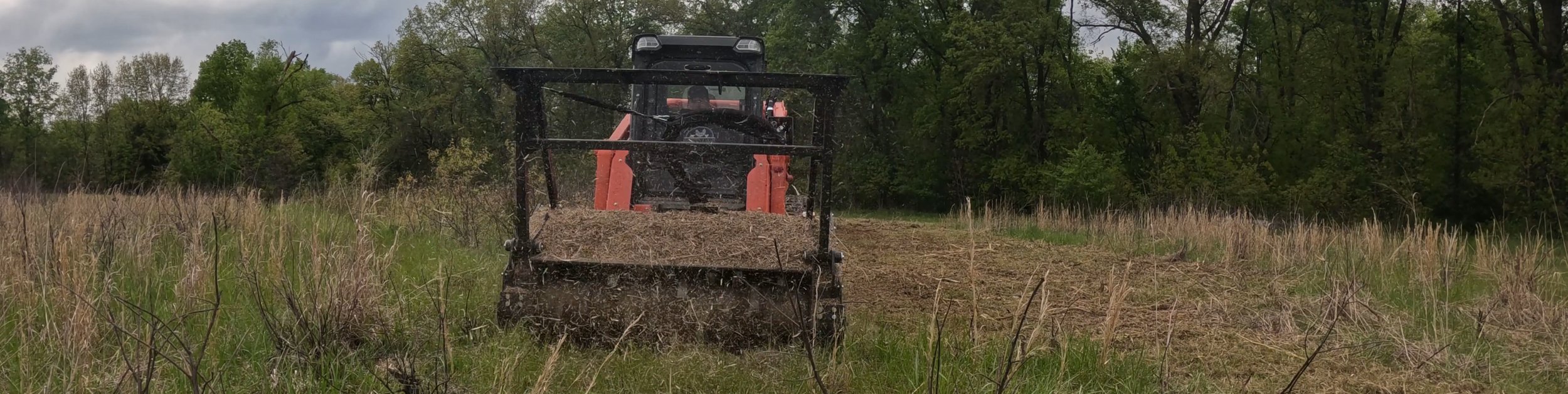
For many residential properties, forestry mulching is a practical part of land clearing because it reduces hauling and leaves a protective mulch layer behind. For some jobs, a combination of clearing methods may make sense.
The important thing is to define what "done" means before work begins.
Plan for maintenance after clearing
Clearing is the first step. Maintenance keeps the land from going backward.
Once the area is opened up, you may need to mow, trim, spot-treat invasive growth, or schedule follow-up cleanup depending on how aggressive the regrowth is. A cleared area that can be maintained is more valuable than an area that looks good for a month and then becomes unmanageable again.
That is why the best land clearing plan considers future access and upkeep from the beginning.
Get a quote before guessing at cost
If you are looking at overgrown acreage and trying to estimate the cost yourself, you will probably miss something. A site-specific quote gives you a better answer because it accounts for access, density, terrain, and the result you want.
Flannel Landworks helps residential landowners clear brush, saplings, field edges, trails, and rough access areas with practical project planning. Learn more about residential land clearing or request a peace of mind quote.