
Brush usually does not take over all at once. It starts along a fence line, behind a shed, at the edge of a field, or in a patch of woods that has not been touched in a few seasons. Then briars, honeysuckle, saplings, and invasive growth make the area harder to walk, mow, or even see through.
That is when brush clearing becomes more than a cosmetic project. It becomes a way to make the property usable again.
Why brush clearing matters
Dense brush can create several problems for homeowners. It blocks access, hides debris, limits visibility, and makes routine maintenance harder. It can also keep spreading into areas that used to be open.
Clearing brush gives you a chance to reset the property. Once the thick growth is removed or mulched down, it is easier to see what you have, decide what should stay, and maintain the area going forward.
For acreage owners, that can mean usable trails, cleaner field edges, clearer fence lines, and more space around the home.
Common areas that need brush clearing
Brush clearing is useful in more places than a fully wooded lot. Homeowners often need help with:
- Fence rows that have disappeared under growth
- Field edges that keep creeping inward
- Backyard acreage that is too rough to mow
- Trails blocked by saplings and briars
- Drainage areas that need better access
- Hunting paths or property access lanes
- Rough corners that collect limbs and debris
The right approach depends on how clean you want the area and what you plan to do with it afterward.
Brush clearing versus land clearing
Brush clearing usually focuses on smaller woody growth, tangled vegetation, briars, and saplings. Land clearing can involve a broader scope, including larger areas, more selective planning, and preparation for a specific future use.
There is overlap between the two, and many projects include both. For example, you may need brush clearing along a field edge and broader land clearing in a rough section behind the house.
The best way to decide is to walk the property and define the finished result. Do you need a path? A clean edge? A mowable area? Better visibility? Each goal points to a slightly different scope.
Why equipment matters
Hand clearing can work for small patches, but it gets slow and difficult when the growth is dense. Cutting brush with small tools can also leave piles of material that still need to be moved, burned, or hauled away.
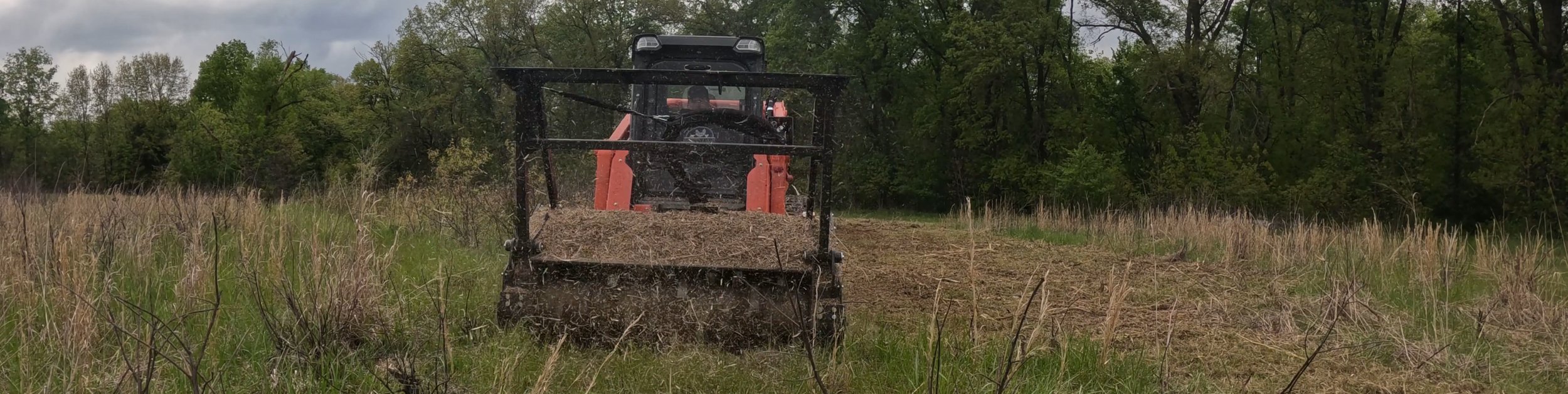
Professional equipment can handle thicker growth more efficiently and leave the area in better shape for maintenance. When forestry mulching is part of the process, much of the material can be processed in place instead of being stacked into piles.
That is especially helpful on residential acreage where the goal is to clean up the property without turning it into a construction site.
What to expect after brush clearing
Brush clearing can make a dramatic difference, but it is not the same as installing a finished lawn. You should expect a more open, manageable area with improved access and visibility. Depending on the growth and method used, there may be mulch, cut material, or rough ground where dense brush used to be.
The next step is maintenance. Mowing, trimming, or follow-up clearing helps keep the area from returning to the same condition.
Take back the areas you avoid
If there are parts of your property you avoid because the brush is too thick, it is probably time to look at a clearing plan. Flannel Landworks helps homeowners open overgrown acreage, trails, field edges, and rough access areas with clear communication and upfront project quotes.
Learn more about brush clearing or contact Flannel Landworks to talk through your property.